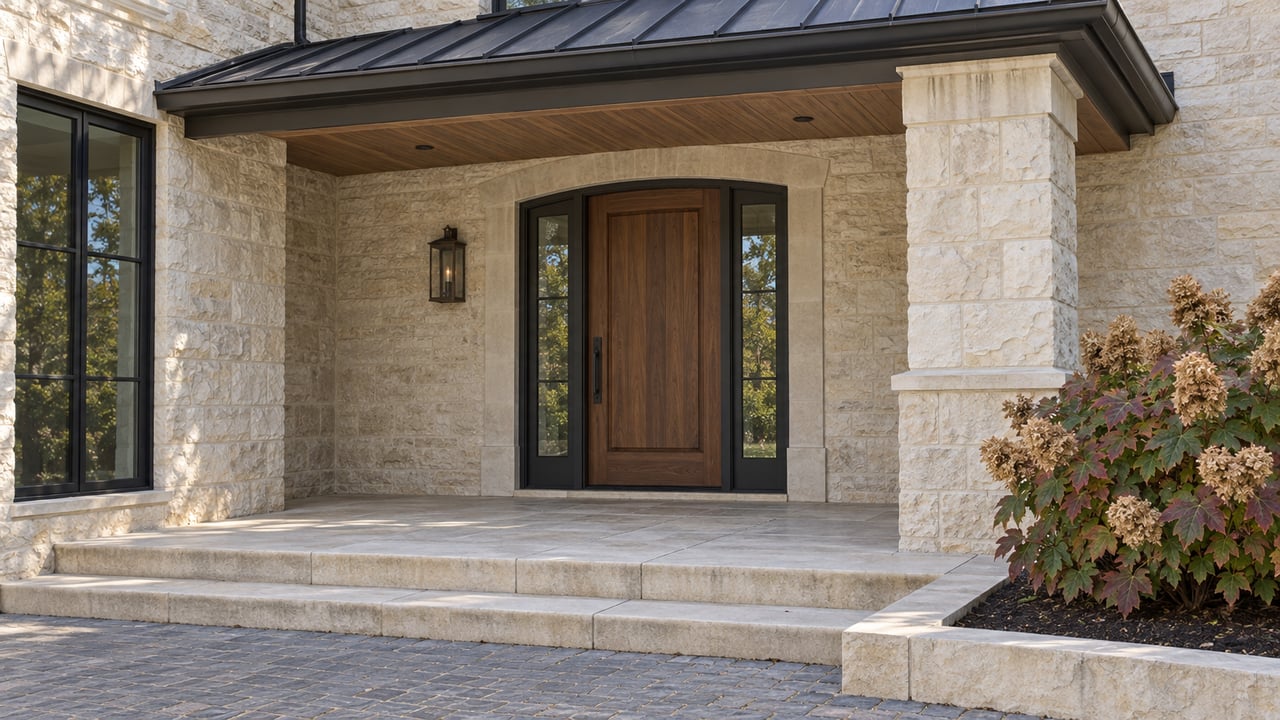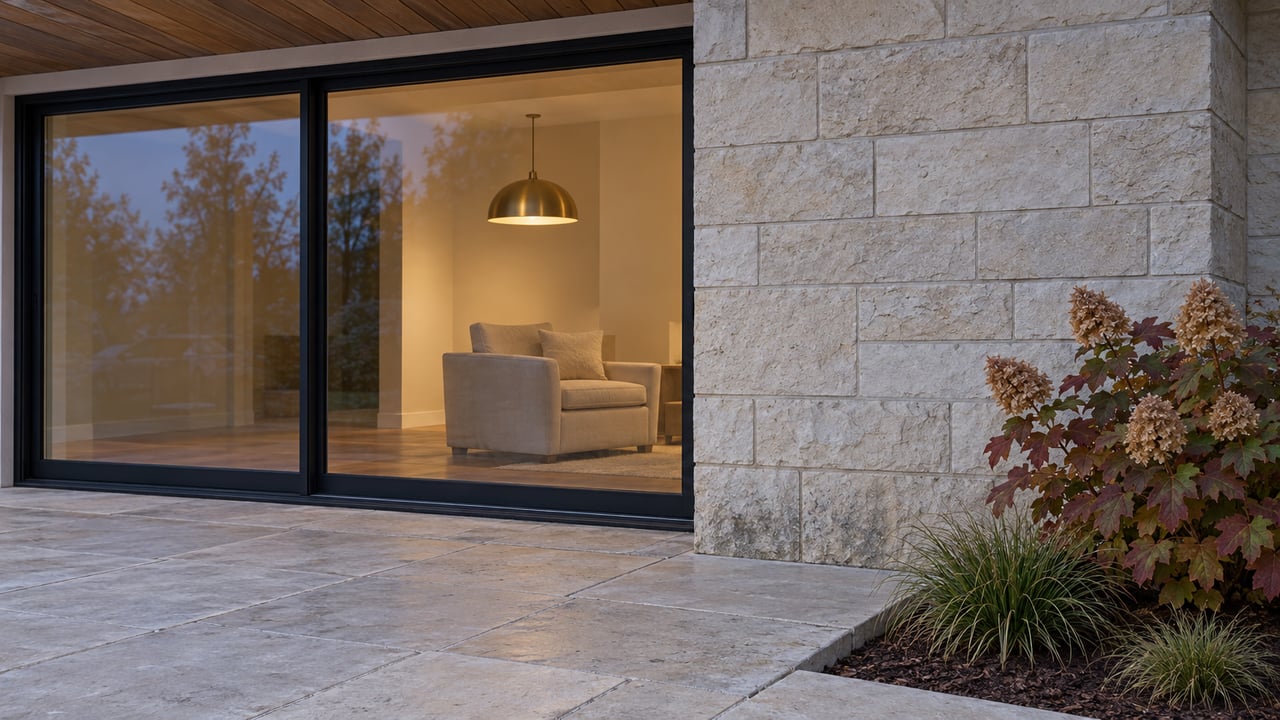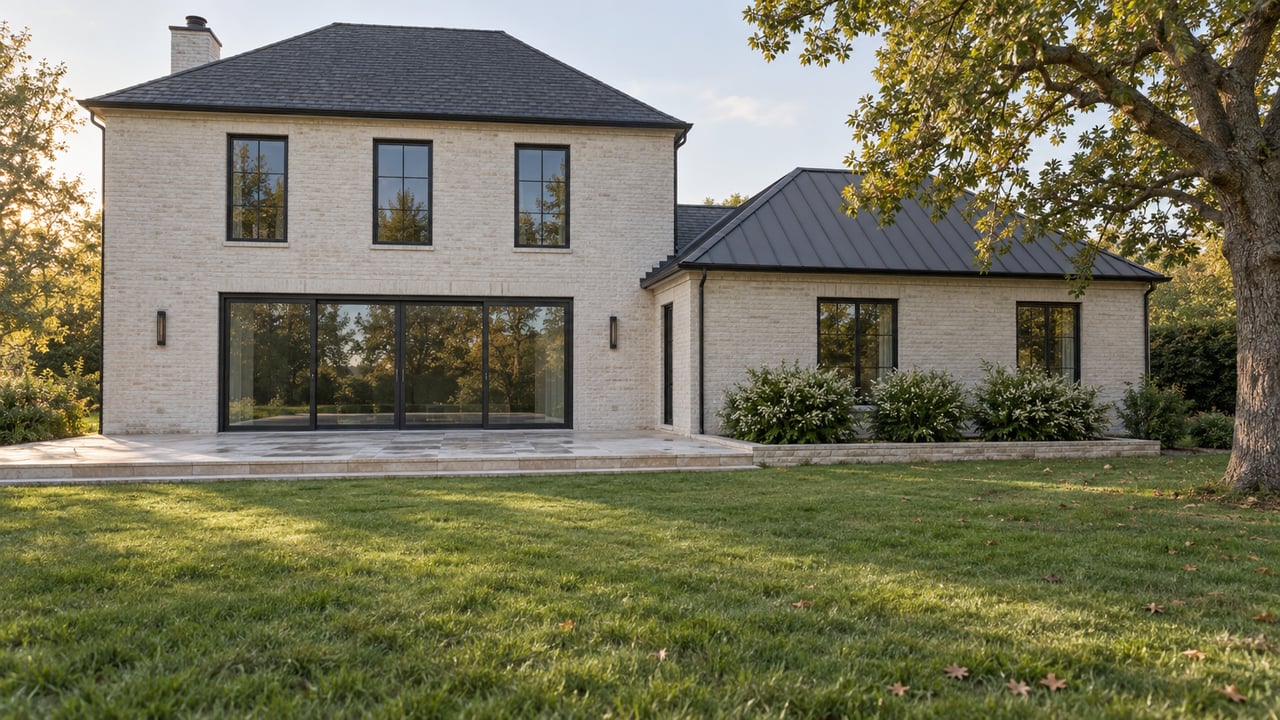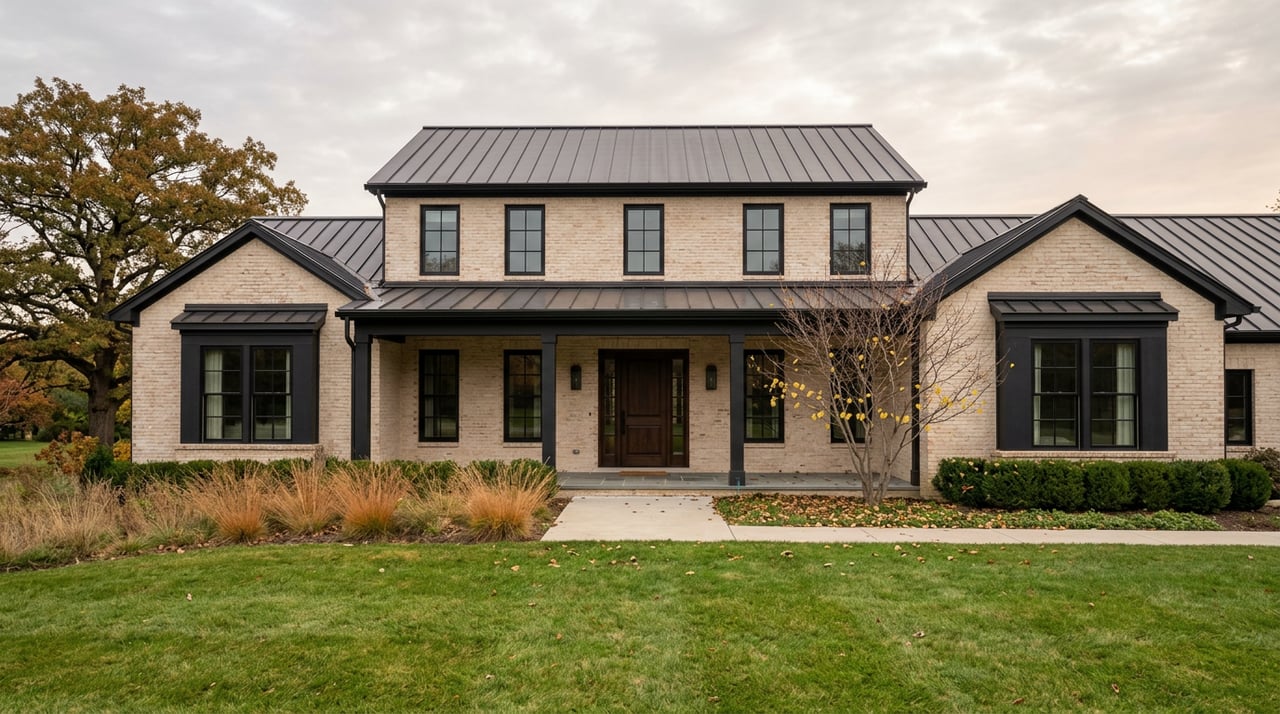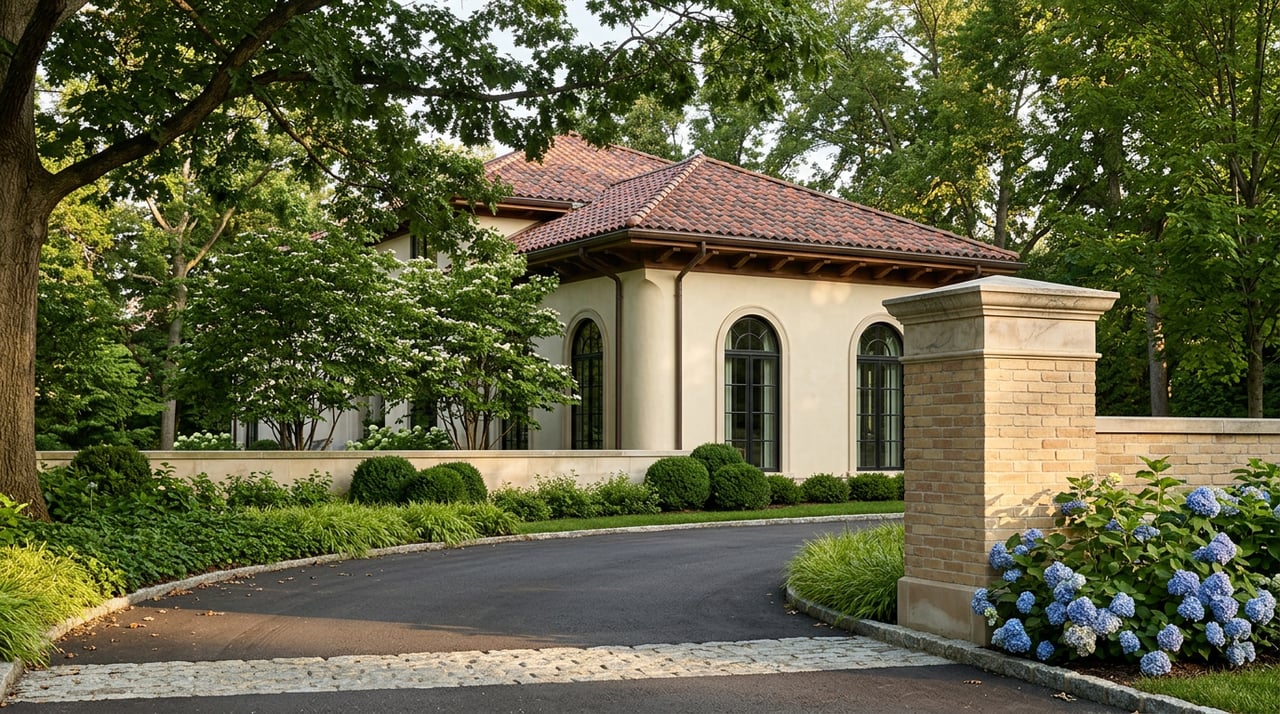
The Carmel luxury story a portal tells you and the Springwood story a closing statement tells you are two different documents. One is built from a citywide median. The other is built from a gated enclave of roughly forty estates on 116th Street where a home may not change hands for years at a stretch. If you are shopping Springwood off Carmel-wide comps, you are already mispriced.
The friction shows up before you write an offer
Springwood is a private, gated community with fewer than fifty single-family estates, sited on wooded lots that back to the Central Indiana Land Trust's Nature Conservancy holdings. That scale is the first fact that matters. In a neighborhood this small, an average year produces a handful of trades at most, and the comp file a buyer's agent hands to an appraiser will often reach outside the gates to Bridlebourne, Laurel Ridge, or Crooked Stick to make the math work.
Springwood homes range in square footage from around 8,300 to over 17,400 and in price from approximately $1,100,000 to $2,955,480, with an average HOA fee around $458 per month. That range is where the confusion starts. It suggests a straightforward $1M-to-$3M bracket. The current active listing tells a different story.
One listing, and what it teaches
415 Springwood Drive is an Italianate residence built in 2006 by R.J. Klein on 1.71 acres, 17,368 total building sqft, with monthly HOA of $1,000 and annual taxes of $55,942 for tax year 2024. As of early July 2026, it was listed at $5,250,000 and had been on the market 77 days.
| Data point | 415 Springwood Dr | Carmel citywide (2026) |
|---|---|---|
| List price | $5,250,000 | $587,000 median list (April) |
| Annual property tax | $55,942 | — |
| HOA | $1,000 / month | — |
| Days on market | 77 | 18 to 43, depending on source |
| Build year / builder | 2006 / R.J. Klein | Mixed |
| Lot | 1.71 acres, wooded, gated | — |
The list price is roughly nine times the citywide median. The tax bill alone runs about $4,660 per month before principal, interest, insurance, or the HOA. That is not a footnote. That is the price of admission to the pocket, and it reframes every affordability assumption a buyer brings in from a portal search.
The median is measuring a different market
Carmel citywide data does what citywide data does: it averages. Over the three months ending April 2026, homes in Carmel received 3 offers on average, sold in around 18 days, and closed at a median price of $550,000, with a median $206 per square foot up 12.6% year over year. A separate April 2026 read of Carmel puts 245 active listings on the market at 0.69 months of supply, with 142 new homes coming to market that month, down 19.77% year over year.
Now compare that to the luxury tier. As of July 2, 2026, Carmel had 90 luxury listings, 96 average days on market, $326.73 average per square foot, and a median list price of $930,000. Same city, different physics. The luxury median list is nearly double the overall median sale, and time on market runs five times longer.
Springwood is a step above even that tier. The point is not that the numbers are bigger. The point is that the mechanisms are different:
- The comp set is thin. Thin comps make appraisals conservative and give lenders room to ask questions.
- Turnover is slow. A house that has traded twice in twenty years leaves you negotiating with an owner whose basis has nothing to do with today's market.
- Buyer demand is narrow. The pool that clears a $5M home with a $56K tax bill in Hamilton County is small and mostly non-local.
The carrying-cost reset
$55,942 in annual taxes plus $12,000 in HOA equals roughly $68,000 per year before a single mortgage payment. That is more than the median household income for many U.S. counties, and it lands before insurance, utilities, groundskeeping, or reserves for a 20-year-old roof.
This is where a buyer who has anchored to a portal median gets caught. A $2M Springwood estate does not carry like a $2M West Clay build. The taxes scale with assessed value on estates north of 10,000 square feet, the HOA is materially higher than the neighborhood's $458 average once you enter the top tier, and the maintenance load on a 17,000 square foot home built in 2006 is on a different schedule than a new custom in Chatham Hills.
The affordability question at this level is not the mortgage payment. It is the twenty-year running cost of ownership, and it belongs in the underwriting conversation before you tour anything.
What 77 days actually signals
Time on market is the statistic most often misread in luxury pockets. Citywide, Carmel homes sold in 48 days in February 2026, but zoom in and the story changes: in 46032 the median was 32, in 46033 it was 36, and in The Village of West Clay it was 71. A more than two-fold spread inside a single city.
Springwood behaves like West Clay, only more so. When 415 Springwood Dr shows 77 days on market, that is not a demand signal. It is a structural signal. The available buyer for a five-bedroom, ten-bath, elevator-equipped Italianate on almost two acres exists, but there are perhaps two or three of them nationally who are actively looking on any given month. Sellers in this pocket should expect a longer marketing window by default, and buyers should not read time-on-market as leverage the way they would in a 32-day zip code.
The related data point worth holding onto: in February 2026, 34.0% of homes in Carmel had a price drop. At the top of the market, that share runs higher. In April 2026, the median list price per square foot sat at $220 compared to the $185 to $200 per square foot that homes were actually selling for, suggesting a portion of current listings were priced above where the market was willing to transact. Ambitious pricing is the norm at the Springwood tier. Patient discipline on the buy side is the correct response.
Pricing an offer inside the gates
If you are seriously in this market, here is how the mechanics translate into moves:
- Build a comp file that reaches out of the neighborhood. Bridlebourne, Laurel Ridge, Estates of Clay West, and Crooked Stick trade often enough to inform an appraisal. Use them, and expect an appraisal contingency to matter more than it does at $1M.
- Model taxes forward, not backward. The 2024 assessment on the current active is a floor, not a ceiling. Any renovation triggers a reassessment window with Hamilton County; underwrite for it.
- Price the HOA at the top of its range. A $458 neighborhood average understates what the largest homes actually pay when private-road, gate, and shared-amenity maintenance is spread across forty houses.
- Treat DOM as noise, not signal. A 77-day listing here is not a distressed listing. Approach with patience, not opportunism, or you will misread the seller and lose the negotiation on tone alone.
- Get the inspection scope right. An 8,000 to 17,000 square foot custom home from the early 2000s has systems reaching the back half of their service life. Roof, HVAC zones, sump and drainage, well and irrigation if present, and any elevator require specialty inspectors, not a generalist.
FAQ
How often do homes actually sell in Springwood? Turnover is low by design. With roughly forty estates and long tenures, expect a handful of trades in a typical year and stretches with zero available inventory. As of the BEX Realty snapshot, there were no homes available for sale in Springwood, which is the more common state of the market than a public active listing.
Is a citywide Carmel appreciation figure useful for Springwood? Only as background. The March 2026 Redfin read showed Carmel at a median sale near $532,000, down 9.1% year over year, with a 99% sale-to-list ratio, and the softening reflected an inventory build at the higher end. The higher end is where Springwood lives, and the softening trend at that tier is more relevant than the citywide appreciation number.
Should a Springwood buyer expect to negotiate? Yes, but on terms, not just price. The larger negotiation levers in this pocket are the inspection response, the personal property schedule, the closing timeline, and any pre-listing work the seller is willing to fund. Sellers who have owned for a decade or more are often less price-sensitive than they are timing- and privacy-sensitive.
Springwood is not a market you shop from a portal. It is a market you enter with a comp file, a tax model, a patient timeline, and a representative who has watched the enclave long enough to know which of the forty homes is actually likely to trade in the next twelve months. If you are considering a purchase inside the gates, or preparing to bring a Springwood estate to market, Jennil Salazar Private Client Group will read the neighborhood on its own terms and price the friction accordingly. Book a consultation.