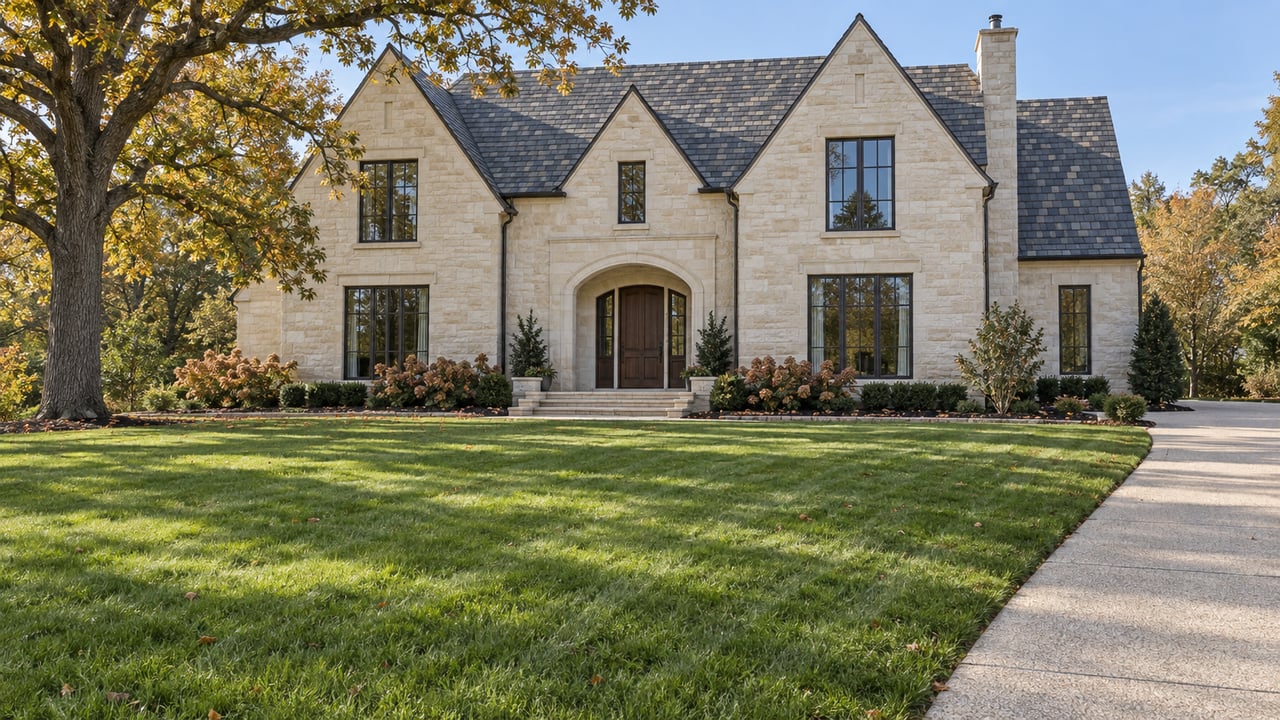
Thirty months ago, a 37-acre parcel at the southeast corner of Towne Road and 126th Street was proposed for 221 homes. Today the plan for the same ground calls for 53, priced from $900,000 to $1.3 million. Each version has come back smaller after public review, and the asking price per home has risen as the count fell. A second infill site near W. Main Street is following the same path. A buyer comparing WestClay with the new neighborhoods forming around it should understand that cycle, because it decides who lives along the Village's edges and what those neighbors can use.
The Same 37 Acres, Proposed Three Times
The parcel is zoned S-1 Residential. Every developer who has tried it has asked the City of Carmel for a planned unit development, so the site's standards would be written into its own ordinance and approved by the City Council.
| Proposal | Developer | Reported | Homes | Expected pricing | Outcome |
|---|---|---|---|---|---|
| Luxe Communities of West Carmel | Luxe BTR | May 2024 | 214 rental homes on 25 acres plus 7 estate homes on 12 acres | Rental, with for-sale estate homes | Scrapped |
| Clay Cottages | Taylor Morrison Homes of Indiana | October 2024 | 99 detached, 36 attached-paired, 7 estate lots | Mostly $400,000 to $600,000, with estates at $1.25M to $1.5M | Withdrawn |
| Clayshire | M/I Homes of Indiana, designed by Studio M | August 2026 | 53 | $900,000 to $1.3 million | Under review |
Current in Carmel reported that the Luxe BTR meeting at the Village of WestClay Meeting House was standing-room-only and turned heated at times. Less than six months later, the paper reported that Taylor Morrison's Clay Cottages plan had arrived with smaller homes, many with first-floor primary bedrooms, mostly priced from $400,000 to $600,000. Carmel's docket now lists that plan as withdrawn.
Clayshire is about a quarter of the original home count, and its starting price sits above most of the Clay Cottages range.
Why Fewer Homes Means Pricier Homes
Land costs the same whether a builder puts 142 homes or 53 on it. When the count falls, each home has to carry a bigger share of the land, the roads, the ponds and the entitlement work. The only way the project still pencils is to sell a more expensive house, so lower density on these borders comes paired with higher-priced homes.
Hampstead, on the Village's W. Main Street side, shows the same pattern. Christopher Scott Homes proposed 36 three- and four-story homes on about 9 acres north of W. Main Street and west of Dumbarton Street, priced at $1.5 million to $2 million, with elevators and rooftop terraces. The site is surrounded by the Village but was not planned to join it.
At the July 21 Plan Commission meeting, commissioners raised concerns about density, tree preservation and fit with the surrounding area. Current in Carmel quoted commissioner Dubbie Buckler: "I think the design is beautiful, but not in this location."
By the Sept. 1 committee meeting, the plan was down to 30 homes. It now includes an engineered pond of about 0.9 acres and reports 36% open space counting the pond, or 26% without it. The price range has not come down to match.
The Line a Key Fob Draws
The new neighbors would not be WestClay members, and that sets the boundary of what they can use.
At the Sept. 15 Plan Commission hearing, the meeting video shows Clayshire's representative answering residents' concerns about amenity use. He said the Village pools are key-fob access and "You can't just walk over and use them." He also said anyone in Hamilton County can have dinner at the Village restaurants, which no Village resident pays to subsidize.
The owners association's own pages put the WestClay amenities into two groups.
Members only
- Three outdoor pools, for members and their guests, with scan-card guidelines
- Six tennis courts and eight pickleball courts, plus three clubhouse exercise rooms
- The George Sweet and Tom Huston rooms at the Meeting House
Open to everyone
- Shops and restaurants in the Village Center and Uptown, which the association counts at more than 100 businesses. Its published account says customers come from a four-mile radius.
- The Gene Stratton-Porter room and the Hoagy Carmichael Ballroom, both available for public rental
The public side keeps growing. Kincaid's Meat Market opened at 2159 Glebe St. in June. Current in Carmel reported that co-owner Joseph Dugdale had waited years for space on Glebe Street, and that the shop carries USDA Prime filet, Wagyu and local products such as Angelo Italian Market pastas.
A household in Clayshire or Hampstead could walk to that counter. It could not swipe into the pools.
So the WestClay assessment pays for the members-only list. The association says every homeowner pays an annual assessment covering common-area taxes and insurance, maintenance, landscaping, utilities, major renovations and staff, and it asks buyers to contact it directly for property-specific figures. Being close to the restaurants and shops costs nothing extra, and the next-door developments are priced on that closeness.
What the Neighbors Would Carry Instead
Clayshire would have its own homeowners association. At the Sept. 15 hearing, its representative said yard barns would be prohibited. The plan includes a fire pit, a pavilion and, after the Oct. 6 committee review, a playground, more shade trees and 25% open space.
At that same Oct. 6 review, the applicant agreed to the same exterior material on all four sides of each home. It also agreed that at least half the homes would have front porches at least 6 feet deep and 30 square feet in area. The applicant said Clayshire's design standards track the Village's architectural guidelines. The difference is enforcement. Inside WestClay, those guidelines are administered by the HOA. In Clayshire, they would be written into the city PUD, and changing them would take Plan Commission and City Council action.
Village residents who spoke on Sept. 15 pointed to WestClay's architectural review committee as the reason the Village has held its look for two decades. They argued that a neighborhood without one has less control once the builder leaves. That is the tradeoff a buyer weighs between the two. A WestClay home comes with discretionary review by neighbors. A Clayshire home would come with fixed rules in a city ordinance.
Where the Edge Gets Specific
For a buyer looking at WestClay homes on the Clayshire side of the Village, three open items matter more than the list price.
The roundabout connection. City staff asked for a public street linking Clayshire to the existing 126th Street and Towne Road roundabout. The city requires two points of access for subdivisions over 15 lots, and the comprehensive plan has long shown a connection through the site. On Oct. 6, the applicant agreed to provide more design detail. The meeting video also records that it would not agree to dedicate right-of-way, and the question was framed as a policy matter for the City Council.
Buffers along the Village alleys. Clayshire's proposed plantings along the perimeter include two shade trees, three evergreens and eight shrubs for every 100 feet. It also proposes a new wrought-iron-style metal fence along the east and north property lines and would keep the existing four-board fence on the south. Village residents noted that some of the adjoining alleys are private and maintained by residents.
Drainage. Residents described stormwater running from the field toward Village alleys in heavy rain. The applicant said on-site ponds would cut the release rate from about 42 cubic feet per second to about 3.7. It also said detailed engineering review by Carmel Engineering and the Hamilton County Surveyor's office comes later in the process.
At Hampstead, the main concern is Elliott Creek and the wooded corridor behind nearby homes. The Sept. 1 discussion identified a creek and drainage corridor with 25-foot easements on each side.
What Happens Next
Neither plan has a Plan Commission recommendation yet. Hampstead was tabled at the Oct. 6 committee meeting, and on Oct. 20, city staff reported that both proposals are headed to the committee's Nov. 5 meeting. The city planner outlined the remaining steps at the Sept. 15 hearing.
- Committee review continues until the PUD language is final.
- The full Plan Commission votes on a favorable, unfavorable or no recommendation.
- The City Council holds its own public hearing and makes the final decision.
- If the Council approves, the developer returns for primary approval to show the plans comply with the PUD.
Anyone writing an offer on a WestClay home near either site this winter is doing it before any of these decisions are final.
FAQ
Would Clayshire or Hampstead residents have access to WestClay's pools and courts? Nothing presented to the Plan Commission commits to that. The Village pools and courts are for members and their guests, and the only connection discussed for Clayshire was a pedestrian path between common areas.
Are the Village Center restaurants and shops open to non-residents? Yes. The association describes customers coming from a four-mile radius, and no published rule requires membership to visit a business.
Is either development approved? No. As of late October, neither plan had a Plan Commission recommendation or a City Council vote.
This post is general information, not legal, tax or financial advice. Confirm association fees, assessments and zoning details for any specific home with the association and the right professionals.
If you are weighing a WestClay home against what is planned next door, Jennil Salazar Private Client Group can walk you through which of the open items affect that address. Book a Consultation.