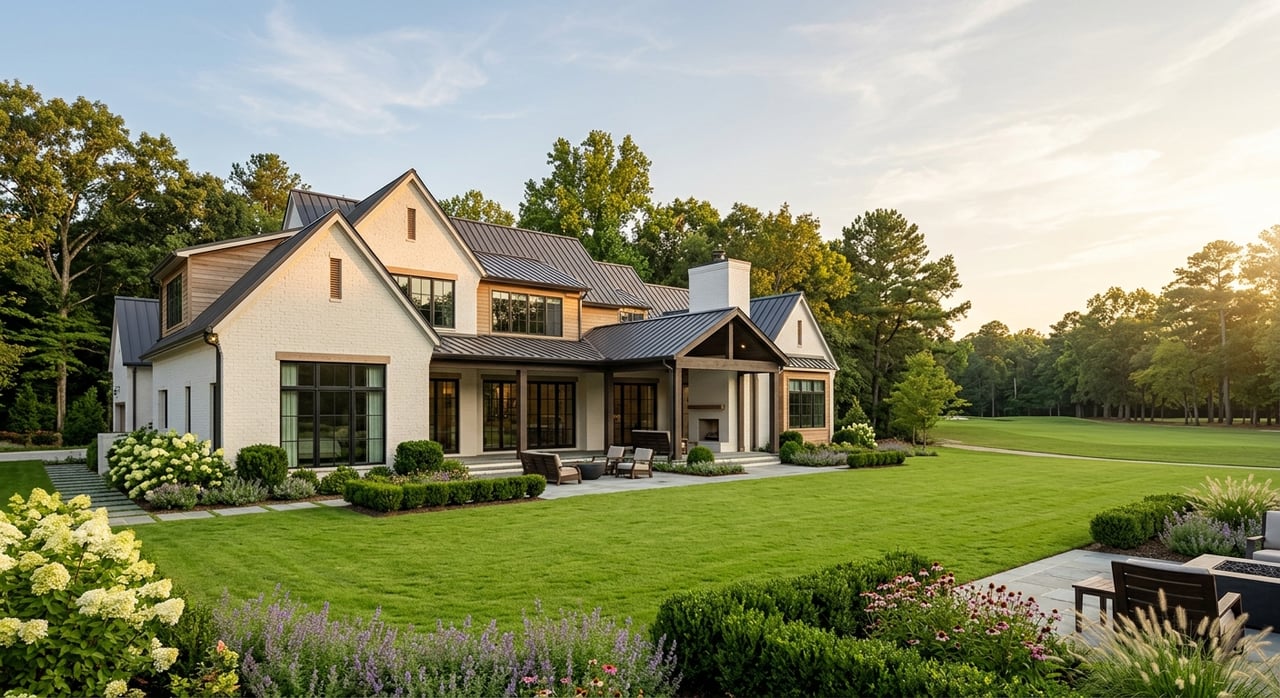
If you are considering a home in a golf community in Hamilton County, you are probably asking a smart question: does the premium actually last? In a strong market like Fishers and the surrounding Hamilton County area, buyers will pay for lifestyle, location, and scarcity, but not every premium holds up the same way over time. This guide will help you understand what supports value in local golf communities, what can weaken it, and how to think about the tradeoff before you buy or sell. Let’s dive in.
Golf Community Value in Hamilton County
The short answer is yes, golf communities generally do hold value in Hamilton County, but the premium is not automatic. According to Indiana Realtors market data, Hamilton County’s median sale price in March 2026 was $445,000, while Fishers’ median sale price in February 2026 was $399,000. That gives you a helpful baseline for judging whether a golf community is simply expensive or whether it offers a value case that supports the higher price.
The bigger question is not whether buyers will pay more for golf-oriented neighborhoods. It is whether the club, amenities, lot quality, and community scarcity are strong enough to justify that premium over time.
What national research shows
Nationally, National Golf Foundation research says homes on golf courses have seen an average 15% bump in property value. At the same time, that same body of research makes it clear that results vary by region, home type, and exact location within the community.
That matters in Hamilton County because local buyers are not just buying golf. They are often buying a package that includes club access, lifestyle amenities, neighborhood design, and a limited supply of premium homesites.
What Supports Long-Term Value
Several factors stand out when you look at golf communities across Hamilton County. The strongest value stories usually come from communities where the club remains healthy, the amenities are broad, and the housing supply is limited.
Club health matters most
A golf community is only as strong as the club experience behind it. Research cited by the National Golf Foundation suggests home values can suffer when a course closes or loses its role as a true amenity.
That is why visible reinvestment matters. In Hamilton County, communities with active upgrades and capital spending tend to make a stronger long-term case than communities that simply rely on a course name or past reputation.
Amenities beyond golf help widen demand
Not every buyer in a golf community is a daily golfer. Many buyers are drawn to the broader lifestyle, including pools, fitness spaces, racquet sports, dining, trails, and social programming.
That wider amenity mix can help support value because it appeals to more buyers. In practical terms, a neighborhood with a private-club feel often attracts interest from households that want the setting and convenience, even if golf is only one part of the decision.
Scarcity supports pricing
Premium lots in golf communities are often limited by design. Once the best fairway, water, or private perimeter lots are built out, the available inventory becomes more constrained.
That scarcity can support pricing, especially in Hamilton County where many buyers already value newer homes, curated amenities, and polished community presentation. A finite supply of premium homesites tends to matter more in upper price tiers.
Location still carries weight
Golf alone does not carry a neighborhood. Location remains a major part of the value story in Hamilton County, especially when a golf community is layered on top of a strong suburban location and established buyer demand.
In other words, the golf premium usually sits on top of an existing location premium. That is one reason these communities often trade in a higher bracket than countywide or Fishers-wide medians.
How Hamilton County Golf Communities Compare
While Fishers itself is not home to every major golf community in the county, nearby communities in Carmel, Westfield, and Zionsville shape how buyers think about golf-home value across the broader Hamilton County market. For Fishers-area buyers, these neighborhoods serve as useful benchmarks.
Chatham Hills in Westfield
Chatham Hills is one of the clearest examples of a lifestyle-driven golf community in Hamilton County. The community markets two golf courses, a driving range with heated covered stalls, indoor and outdoor pools, tennis, pickleball, bowling, golf simulators, dining, childcare, and access to the Monon Trail.
Pricing also shows how far the premium can stretch when amenities and product depth are strong. Research examples place homes from about $675,000 to $1.155 million, with a former model home selling for $2.6 million. That range shows buyers are not only paying for golf, but also for newer product, amenity depth, and a more private-club style environment.
Bridgewater in Carmel
Bridgewater offers a different kind of value story because it spans a much wider internal price band. Built around 27 holes of golf on 725 acres, the community also includes a 5-mile walking trail, lakes and ponds, dining, pools, fitness, tennis, pickleball, and childcare.
Recent examples in the research report range from about $305,000 for a lower-maintenance townhome to around $815,000 for a remodeled ranch and up to $1.64 million for a custom golf-course home. That flexibility can make Bridgewater appealing to buyers who want club access and community amenities without entering only the highest luxury tier.
Crooked Stick in Carmel
Crooked Stick is the most golf-first example in this group. It is a limited-membership private club built around a Pete Dye course, and the current greens rebuild and stream-restoration project signals meaningful reinvestment in the asset itself.
The surrounding housing stock is scarce and high-end, with recent examples in the research ranging from about $700,000 to $6 million. This is a very different buyer profile than a broad lifestyle club. Here, exclusivity and golf identity are a larger part of the value equation.
Holliday Farms in Zionsville
Holliday Farms works best as a regional benchmark rather than a direct Fishers comparison. It is a newer luxury community with two Pete Dye-designed courses, golf-cart-friendly streets, fitness, dining, tennis, pickleball, events, and additional club amenities.
Current examples in the research range from about $799,000 to $3.6 million. Because the community is still in active buildout, it offers more flexibility in home and lot selection, but it has less resale history than more mature communities like Bridgewater or Crooked Stick.
Why Some Golf Homes Hold Value Better
If you are trying to predict whether a golf-community home will age well from a value standpoint, a few details matter more than others.
The club must keep investing
A healthy club usually shows you visible signs of momentum. For example, Bridgewater has highlighted awards and renovations, while Crooked Stick’s rebuild points to long-term upkeep rather than deferred maintenance.
When buyers see active reinvestment, it often strengthens confidence in the community. When investment slows or amenities weaken, the premium can become harder to defend.
The home’s position matters
Not every home in a golf community carries the same value profile. A home directly on a premium lot may command a different response than a home deeper inside the neighborhood without a direct golf or water view.
This is one reason average premiums can be misleading. Two homes in the same community may perform very differently based on lot placement, privacy, finish level, and proximity to club amenities.
Mature communities and new buildouts behave differently
Established communities often have more resale history, which gives buyers and sellers a clearer pricing pattern. Newer communities may offer more design flexibility and current finishes, but their long-term resale trends are still developing.
That does not mean one is better than the other. It simply means your evaluation should match the stage of the community and the kind of risk or upside you are comfortable with.
How the Numbers Frame the Premium
The research report shows just how different these communities can be from the countywide baseline. With Hamilton County’s median sale price at $445,000 and Fishers’ median at $399,000, many representative golf-community homes sit in a far higher tier.
Examples from the report make that clear:
- Chatham Hills at $1.155 million is about 2.6 times the county median
- Bridgewater at $815,366 is about 1.8 times the county median
- Holliday Farms at $2.795 million is about 6.3 times the county median
- Crooked Stick at $3.375 million is about 7.6 times the county median
That means the value conversation is not really about whether golf communities cost more. They do. The smarter question is whether the combination of club quality, amenities, scarcity, and location is rare enough to support that premium over the long term.
What Fishers Buyers and Sellers Should Take Away
If you live in Fishers or are relocating to the area, golf communities in nearby Hamilton County markets can still influence your buying and selling decisions. They shape expectations around luxury pricing, amenities, and lifestyle-driven neighborhoods across the county.
For buyers, the key is to look past the golf label and study the full package. For sellers, it helps to understand which parts of your community create the strongest value story so your home is positioned correctly from day one.
In most cases, the strongest-performing golf communities in Hamilton County share four traits:
- Ongoing club reinvestment
- Broad amenities beyond golf
- Limited supply of premium lots
- Strong location appeal within the county
If you want help comparing lifestyle communities, evaluating premium pricing, or positioning a luxury home for maximum exposure, Jennil Salazar offers a concierge, market-savvy approach grounded in Hamilton County expertise.
FAQs
Do golf communities hold value in Hamilton County, Indiana?
- Yes. The research supports that golf communities in Hamilton County generally hold value, but the premium depends on club health, amenities, scarcity, and location.
Are golf homes in Fishers priced higher than the local median?
- Fishers itself serves as a useful baseline at a $399,000 median sale price, while many golf-community homes across Hamilton County are priced well above that level.
What makes one golf community more valuable than another?
- The strongest drivers are ongoing club investment, broader lifestyle amenities, limited premium lots, and an established location within Hamilton County.
Do non-golf amenities matter in Hamilton County golf communities?
- Yes. Pools, fitness spaces, racquet sports, dining, trails, and social programming can widen buyer demand and help support value.
Is buying in a newer golf community riskier than buying in an established one?
- Newer communities may offer more design flexibility but often have less resale history, while mature communities usually provide clearer pricing patterns based on past sales.